Just for fun going out 40 years – drum roll
please – 5.09% an increase of 49%. That’s
an improvement moving your retirement years from having to eat Alpo dog food to
chuck roast. This is also an example of
the law of diminishing returns when you go out 80 years [5.94%] the relative increase
is now only 17%. 160 years?? Average annual return 6.37% or a relative
increase from 80 years holding to 160 years of 7%! So yes time in the market increases
performance but relative to what and how long is always the question.
Active Asset Allocation
Four Uncorrelated Assets
1.)
Stocks
2.)
Long Term High Grade Corporate/Government Bonds
3.)
Short Term Notes (Cash)
4.)
Gold – Precious Metals Mining Companies
Four Assets Correlated to Four Economic
Conditions
1.)
Prosperity
2.)
Deflation
3.)
Recession
4.)
Inflation
1.)
Prosperity: Stocks become a clear winner during conditions of increasing
employment, rising wages tied to increasing productivity along with rising
profits. Junk bonds (they trade like
stocks) are also winners in this environment despite their low quality; the
economy is so good interest and principal payments are made – defaults are
minimum – and a positive climate for refinancing. High quality corporate/ government bonds are
secondary winners as prosperity is noted for stable or slowly declining
rates. Gold is generally a loser in
prosperity as inflation is minimized and investors seek higher returns in more
traditional investments.
2.)
Deflation: Deflation is the
decease in the general price level of goods and services. The Great Depression is a standout example of
deflation. The general cause is when
excess debt is built up in the private sector that can no longer be increased
and/or maintained resulting in massive bankruptcies. This creates an environment of panic as
businesses scramble to become profitable by firing employees and cutting hours
of remaining workers. In this
deflationary episode interest rates decline, prices decline, and the almighty
buck rises in value against softer currencies.
Long term high quality corporate bonds and
long term U.S. government bonds are winners in this type of economy. Stocks, gold, and junk bonds generally will
fall in price along with interest rates on short term notes.
3.)
Recession: For DYI's purposes
recessions are a period of increasing interest rates engineered by the Federal
Reserve in order to quell inflation by slowing down an over heating
economy. This condition is temporary as
the economy will either adjust to the new economic environment bringing back
prosperity or a deflationary period will begin.
High quality corporate/government bonds,
stocks, gold, and junk bonds are all losers in this scenario. Short term notes
and money market funds are clear winner as their principal value remains steady
plus the interest income improves with increasing interest rates.
4.)
Inflation: Too much money chasing
too few goods. When Federal government
liabilities become onerous from financing of war(s) and/or social programs that
are too great to be paid by taxation governments will resort to money creation
to pay the remaining costs. After WWII,
Korea, Vietnam and the war on Poverty inflation began slowly prices increased
relentlessly (despite high taxes) as government liabilities expanded. When President Richard Nixon closed the gold
window (1971) the last vestige of inflationary controls were removed with
inflation peaking in the high teens only until Paul Volker was appointed as Fed
Chairman (August 79) who crushed inflation with high interest rates.
Stocks, high quality long term
corporate/government bonds, junk bonds are all losers as inflation soars along
with interest rate increases (despite the Fed's efforts to suppress them). Cash (money market funds) or short term notes
are neutral or slightly lag inflation rolling up to the higher interest rate
quickly.
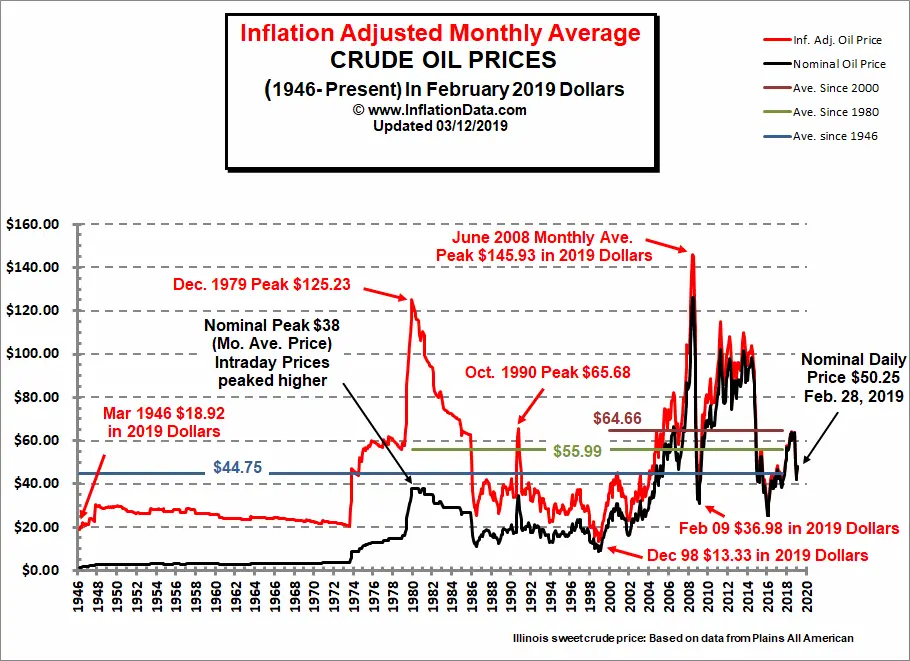
Gold is a winner when inflation breaks above
5%. When inflation goes double digit
gold is marked up in price to reflect the debasement of the currency. Gold will also rise in price based upon fear
of massive defaults as gold has no counter party risk.
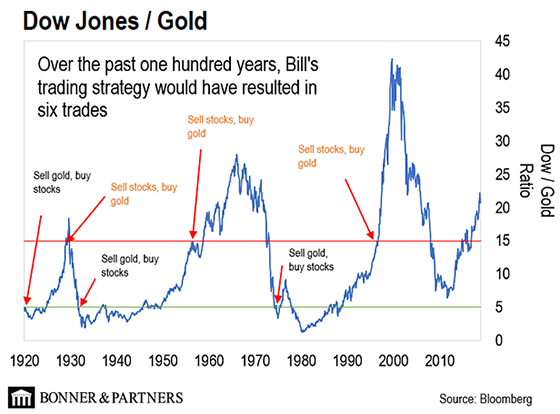
VALUATIONS DO MATTER
This investment approach is an offshoot of
Harry Browne's Permanent Portfolio that maintains a fixed 25% invested in the
above four asset categories listed above.
Harry's uncorrelated assets at that time was ground breaking. Today it is taken for granted. As much as I was impressed with Harry's work
it always made me uncomfortable to always own 25% in each asset. When
valuations are at extreme lows a greater percentage is called for and
conversely at historical nose bleed levels significantly less (or none).
DYI’s approach working through our four
assets and determining with a measure of accuracy the percentage invested
depending upon long term valuations.
This is done by calculating our averaging formula for each asset.
If all three assets - gold, stocks, long term
bonds, cash is our default position - are at fair or average value then each of
the categories will be at 25% of the portfolio just like Browne's Permanent
Portfolio. However as prices move up or
down from their respective mean our averaging portfolio will make the
adjustment enhancing the overall return.
Will DYI outperform the market??
Our primary goal is to outperform the
Permanent Portfolio first. Outperform
the market? Maybe? DYI's intentions is a
6% real return - as opposed to Browne's 4% - into your pocket with low
volatility as opposed to our fully invested stock market
investor. In closing each of these
assets stocks, long term bonds, gold and cash, all have their moment of fame or
shame. Value players reduce or eliminate
the overvalued assets and increase the undervalued; simple as that!
Updated Monthly
AGGRESSIVE PORTFOLIO - ACTIVE ALLOCATION - 2/1/20
Active Allocation Bands (excluding cash) 0% to 50%
50% - Cash -Short Term Bond Index - VBIRX
50% -Gold- Global Capital Cycles Fund - VGPMX **
0% -Lt. Bonds- Long Term Bond Index - VBLTX
0% -Stocks- Total Stock Market Index - VTSAX
[See Disclaimer]
** Vanguard's Global Capital Cycles Fund maintains 25%+ in precious metal equities the remainder are companies they believe will perform well during times of world wide stress or economic declines.
This blog site is not a registered financial advisor, broker or securities dealer and The Dividend Yield Investor is not responsible for what you do with your money.
This site strives for the highest standards of accuracy; however ERRORS AND OMISSIONS ARE ACCEPTED!
The Dividend Yield Investor is a blog site for entertainment and educational purposes ONLY.
The Dividend Yield Investor shall not be held liable for any loss and/or damages from the information herein.
Use this site at your own risk.
PAST PERFORMANCE IS NO GUARANTEE OF FUTURE RESULTS.
DYI